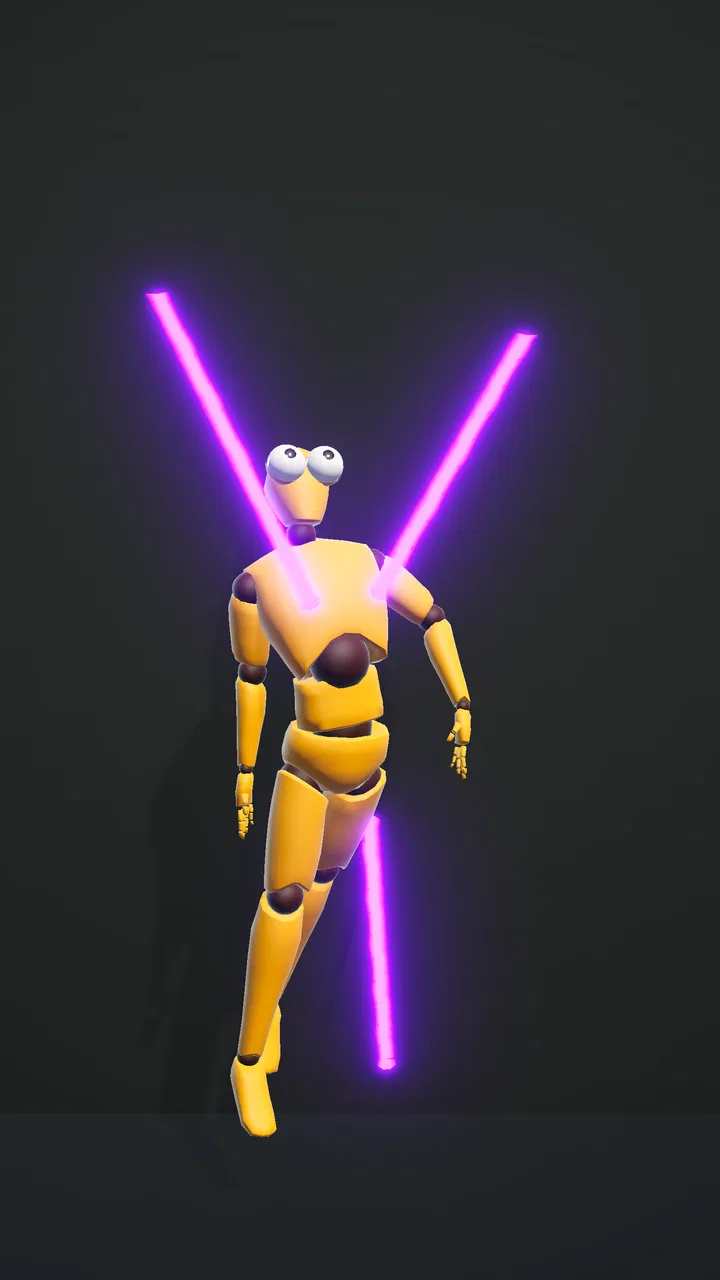
Elastic Playground:Ragdoll Fun
- 4.5
- Rating
- 10.00M
- Installs
- Free
- Price
 Analysis by App-foxy
Elastic Playground: Ragdoll Fun is the kind of action game I open when I want a quick, silly distraction rather than a serious challenge. Its central idea is immediately clear: I manipulate rubbery physics, pull or fling ragdolls, and enjoy the unpredictable collisions that follow. That simplicity is its strongest first impression. I do not need a tutorial-heavy introduction or a long explanation before the basic interaction makes sense.
After spending time with it, I see a game built around short bursts of experimentation. The fun comes from trying a movement, watching the ragdoll react, and then changing the angle, force, or timing to see whether the next attempt produces something more amusing. It is free to play, rated for teens, and developed by KAYAC Inc., so it sits comfortably in the casual side of mobile action rather than competing with story-driven adventures or precision-focused combat games.
The important question is not whether the first session is entertaining. It is. The more useful question is whether the physics remain interesting after the novelty of throwing things around has faded. My answer is mixed but favorable: this is a good pocket game for people who enjoy playful experimentation, though it is less convincing as a daily main game for anyone who needs deep progression, a strong narrative, or constantly changing objectives.
You May Also Like

 Blood Strike: 2.5 Anniversary
Blood Strike’s Loadouts Turn Every Drop Into a Tactical Gamble
A close look at Blood Strike’s custom loadouts: how fast access to signature weapons reshapes its battle royale rhythm, rewards preparation, and narrows the gap between fights.

 Pandora - Music & Podcasts
Pandora’s Music Is Easy to Start, but Harder to Recover
Pandora’s strength is its low-effort path from a seed to a station. Its weak spot is how much confidence it asks you to place in connection, setup, and quiet recovery.

 8 Ball Pool
 Is Built on Rivalries, Rematches, and Routine
A close look at the rivalries, rematches, shared routines, and unanswered safety questions that turn a quick pool match into a persistent mobile community.

 Samsung Music
’s Quiet Strength Is Playing What You Already Own
Its reach comes less from spectacle than from dependable access to a personal library. That simplicity is both the app’s strongest retention engine and its ceiling.

 AccuWeather: Weather Radar
AccuWeather Review: A Quick, Clear Forecast for Everyday Decisions
For everyday plans, the best forecast is the one you can understand quickly. AccuWeather makes rain timing, radar, and local conditions easy to act on, with a few trade-offs.

 Hill Climb Racing
Why Hill Climb Racing Still Turns Crashes Into One More Run
A tiny car, a bumpy hill and one more upgrade: Hill Climb Racing keeps resurfacing because its simple chaos makes every near-miss feel personal.
More From Our News Desk



What the first week feels like
During the first few sessions, the appeal is wonderfully immediate. The controls invite curiosity because even a small change in how I pull or fling the rubber can alter the result. Instead of following a fixed attack pattern, I am encouraged to test the environment and the ragdoll’s response. That makes failure feel less irritating than it would in a conventional action game. A failed attempt is often another funny outcome rather than a simple loss.
I especially like that the game does not demand a large block of free time. It works well when I have a few minutes before an appointment, while waiting for food, or when I want to reset my attention after a long task. A typical session can begin with one experiment and turn into several more because the physics create small surprises. The game’s short-session nature is a genuine strength, not merely a convenient description.
The first week also reveals the difference between this and a standard fighting game. In a traditional action title, success usually depends on memorizing attacks, reading opponents, or improving reaction speed. Here, the pleasure is more tactile and comic. I am manipulating motion and momentum, not building a complicated combat routine. That makes it easier to pick up, but it also means the game has less mechanical depth for players who want mastery through a large skill system.
One useful approach is to treat each attempt as a small physics puzzle. Rather than pulling as hard or as quickly as possible every time, I try a controlled movement first, observe how the ragdoll travels, and then adjust one variable. This makes the interaction feel more deliberate and helps separate genuine control from random-looking chaos. It is a simple habit, but it gives the game more staying power than mindlessly repeating the same fling.
Another practical tip is to play with a specific mini-goal in mind. I might try to create a clean launch, produce a particular type of collision, or see how far I can move the ragdoll with a restrained gesture. The game becomes less like a sequence of disposable jokes and more like a small laboratory. That shift matters because physics games can become repetitive quickly when every action is treated as an attempt to make the biggest possible mess.
The broad audience response suggests that the basic formula is connecting with many players. The game has a 4.7 average from around 11 thousand ratings and has passed five million installs. Those figures do not guarantee that it will suit everyone, but they fit my experience of the opening: the concept is easy to understand, amusing without much preparation, and friendly to players who want action without a demanding learning curve.
Who will enjoy the early appeal
I would recommend the opening experience to players who like ragdoll humor, toy-like physics, and games that reward curiosity more than planning several moves ahead. It is also a good choice for someone who finds conventional action games too intense or too time-consuming. The teen content rating is worth noting for families making a quick suitability decision, although parents should still consider whether the game’s physical comedy matches their own preferences.
It is less suitable for someone looking for a complete competitive loop. If your favorite mobile action games are built around ranked matches, character builds, long campaigns, or precise combo execution, the loose physics will probably feel lightweight. The game’s charm comes from its playful handling, not from a large strategic framework.
What remains after the novelty
After the first week, the central interaction is still pleasant, but my expectations change. At first, almost every unusual ragdoll movement feels like a discovery. Later, I begin to recognize the boundaries of the experience. The same basic actions remain enjoyable when I am in the right mood, yet they no longer create the same level of surprise each time.
This is where personal play style becomes important. I can return to the game month after month if I treat it as a small stress-relief toy rather than a progression-heavy hobby. Its recurring value comes from accessibility: I can launch it without remembering a complicated storyline or rebuilding a strategy. That low mental cost is useful on tired days, especially when I want interaction rather than passive scrolling.
However, low mental cost can also become low motivation. Without a strong reason to return, I may play for a short period and then leave it installed but untouched. That is not necessarily a flaw in a deliberately simple physics game, but it does mean the app earns lasting space mainly through mood and convenience. It is not the kind of title I would expect to occupy the center of my gaming routine.
For month-to-month use, I find the best pattern is occasional play rather than a strict daily habit. Returning after a break makes the physics feel fresh again. If I force myself to play every day, the repeated structure becomes more visible and the humor loses some of its impact. In other words, the game benefits from being a snack. Turning it into a scheduled meal would expose its limited variety too quickly.
A realistic everyday scenario shows where it works best. Imagine finishing a work call with ten minutes before the next obligation. I can open the game, make a handful of experiments, enjoy a few unexpected tumbles, and close it without worrying about losing a long campaign or falling behind a team. That is a meaningful use case. By contrast, during a long evening when I want sustained progression, I would probably choose a deeper action game instead.
The game also suits shared, informal play. I can hand the phone to a friend and let them try to produce a better or stranger result without explaining a complicated control scheme. That social value comes from the immediacy of the physics, not from a formal multiplayer structure, so I see it as a quick conversation starter rather than a substitute for a dedicated party game.
How it compares with familiar alternatives
Compared with a conventional arcade action game, Elastic Playground: Ragdoll Fun is less about score-chasing and more about seeing what the interaction produces. Compared with a puzzle game, it offers less certainty and fewer carefully defined solutions. Compared with a physics sandbox, it is easier to approach but may not provide the same feeling of open-ended construction. Those trade-offs explain both its accessibility and its limits.
I would choose this over a competitive action game when I want no pressure and no need to maintain a high level of skill. I would choose a traditional arcade title when I want a clear score target, and a deeper physics sandbox when I want to build, experiment for a long time, or create more elaborate setups. The right alternative depends on whether I want a quick laugh, a measurable challenge, or a creative project.
The game’s free price makes that comparison easier. I can try it without committing money, which is appropriate for an experience whose main appeal is immediate amusement. Still, “free” does not automatically mean it deserves permanent storage. I judge it by how often I genuinely want to open it, not by the fact that trying it costs nothing.
Maintenance, friction, and reasons it may fade
One advantage is that the maintenance burden feels low from a player’s perspective. I do not need to keep track of a complicated build, remember a daily route, or study a large set of systems before returning. The current version is 1.0.74, and the game supports devices running Android 5.1 or later, which makes it broadly approachable for Android users with older compatible phones. That technical accessibility is useful, although performance and comfort can still vary by device.
The main maintenance issue is not management; it is attention. A game with a narrow central loop has to keep earning my curiosity. If I stop experimenting and repeat the same gesture, the experience becomes predictable. My strongest advice is to avoid treating it like a checklist. There is little value in opening it merely because it is installed. Open it when you actually want a few minutes of physics-based play.
Touch control is another possible source of friction. Pulling and flinging sounds simple, but fine control can feel less consistent than a physical button or a gamepad. When I want a precise result, small differences in finger placement or release timing matter. That uncertainty is part of the comedy, but it can also be frustrating when I am trying to reproduce a particular movement rather than accept whatever happens.
Screen size may influence the experience too. On a compact phone, the action can feel immediate and easy to manage, but my finger may cover part of what I am trying to observe. On a larger display, the interaction may be easier to watch, though reaching across the screen can feel less comfortable during extended play. This is a practical reason to keep sessions short, especially if the device is not designed for one-handed play.
The game can also fatigue players who need visible long-term goals. The first sessions provide their own motivation because everything feels new. Later, I need to supply the purpose myself through experiments or personal challenges. That is rewarding for curious players, but it is not enough for everyone. If you rely on unlocks, story chapters, evolving opponents, or a strong sense of account growth to maintain interest, this may feel empty after the initial amusement.
Another limitation is emotional range. Ragdoll physics can be funny, relaxing, and pleasantly absurd, but the tone remains fairly narrow. I should not expect suspense, character attachment, or meaningful dramatic stakes. That is not a problem when I want a toy-like distraction; it becomes a weakness when I am looking for a game that can carry a longer emotional journey.
There is also a difference between randomness and variety. Unexpected motion can make a game feel fresh, but unpredictable outcomes are not the same as genuinely new content. Once I understand the broad behavior of the rubber and ragdolls, some experiments begin to resemble earlier ones. The best way to manage this is to vary the intention behind each session rather than simply repeating the most dramatic action.
Small habits that improve its staying power
I get more from the game when I use three simple habits. First, I change the goal of an attempt instead of always maximizing force. Second, I pause briefly after an interesting result and identify what caused it, such as timing or direction. Third, I stop while I am still amused rather than continuing until every experiment feels familiar. These habits preserve the sense of discovery and reduce the chance that the game becomes background tapping.
I also recommend keeping expectations modest. The title works best as a compact action toy, not as a replacement for a full-length game. If I install it for quick breaks, it meets that purpose well. If I expect a month-long progression system, a rich story, or endless new mechanics, I am setting myself up for disappointment that comes from choosing the wrong category of experience.
For readers wondering whether it is appropriate for a younger player, the listed age guidance is Teen, so I would use that as the starting point rather than assuming that cartoon-like physics automatically make it suitable for every child. For readers wondering whether it is worth trying, the free entry point makes a short test sensible. I would play several brief sessions, including one after the initial novelty has passed, before deciding whether it belongs on my regular device.
My long-term verdict
Elastic Playground: Ragdoll Fun earns a place on my phone when I want a low-pressure action game built around touch, motion, and comic physics. Its first-week appeal is real, and its strongest recurring value is convenience: I can return without preparation and get a small burst of interaction almost immediately. KAYAC Inc. has kept the concept focused, which helps the game feel approachable rather than overloaded.
At the same time, I would not call it an endlessly durable game. The central novelty can fade, and the experience depends heavily on whether I enjoy inventing my own mini-challenges. Players who want a deep system, a narrative reason to continue, or a demanding competitive loop should look elsewhere. A more traditional action game will be better for mastery, while a fuller sandbox will be better for extended creative sessions.
My final recommendation is therefore specific: install it if you like playful physics and want a free game for short, pressure-free breaks. Keep it if you naturally find yourself testing new ways to pull and fling the ragdolls after the first excitement wears off. If you only repeat the same action and wait for the game to provide all the motivation, it will probably become disposable.
For me, the lasting value is not in constant progression but in controlled bursts of absurd experimentation. That is a narrower promise than a full action adventure, yet it is an honest and useful one. The best reason to keep this game is the freedom to make a few minutes entertaining without turning them into a commitment. With that expectation, it is an easy recommendation for casual physics fans; without it, the novelty may not justify the space for long.
FAQs for Elastic Playground:Ragdoll Fun
01What is the main objective of Elastic Playground: Ragdoll Fun?
Elastic Playground: Ragdoll Fun is designed to provide a sandbox environment where users can experiment with physics-based interactions. The main objective is to manipulate ragdoll characters in various scenarios, using tools and controls to create entertaining and unexpected outcomes. It’s a game focused on creativity and amusement rather than traditional goals.
02Does Elastic Playground: Ragdoll Fun require an internet connection to play?
No, Elastic Playground: Ragdoll Fun does not require an internet connection for the core gameplay. Users can enjoy manipulating ragdolls and experimenting with physics offline. However, an internet connection may be needed for updates or additional downloadable content provided by the developers.
03Is Elastic Playground: Ragdoll Fun suitable for children?
Elastic Playground: Ragdoll Fun is generally suitable for children, as it offers a playful and creative environment without any explicit content. However, parents should be aware that the game involves ragdoll physics, which might include exaggerated character movements and impacts. It’s advisable to review the game first to ensure it aligns with your comfort level for your child.
04What devices are compatible with Elastic Playground: Ragdoll Fun?
Elastic Playground: Ragdoll Fun is available for both Android and iOS devices. It requires a relatively modern smartphone or tablet to run smoothly, with updated operating systems to ensure compatibility. Checking the specific device requirements on the app store is recommended for optimal performance.
05Are there in-app purchases in Elastic Playground: Ragdoll Fun?
Yes, Elastic Playground: Ragdoll Fun includes in-app purchases. These may offer additional tools, scenarios, or customization options to enhance the gaming experience. While the base game provides plenty of fun, these optional purchases can expand the variety of interactions and elements available in the playground.
Pros
- Intuitive controls for easy gameplay.
- Vibrant graphics enhance user experience.
- Regular updates with new levels.
- Lightweight app
- won't strain device.
- Offline mode available for play anywhere.
Cons
- In-app purchases can be frequent.
- Ads may interrupt gameplay.
- Limited customization options.
- Some levels may feel repetitive.
- No multiplayer mode available.

Elastic Playground:Ragdoll Fun
Gallery